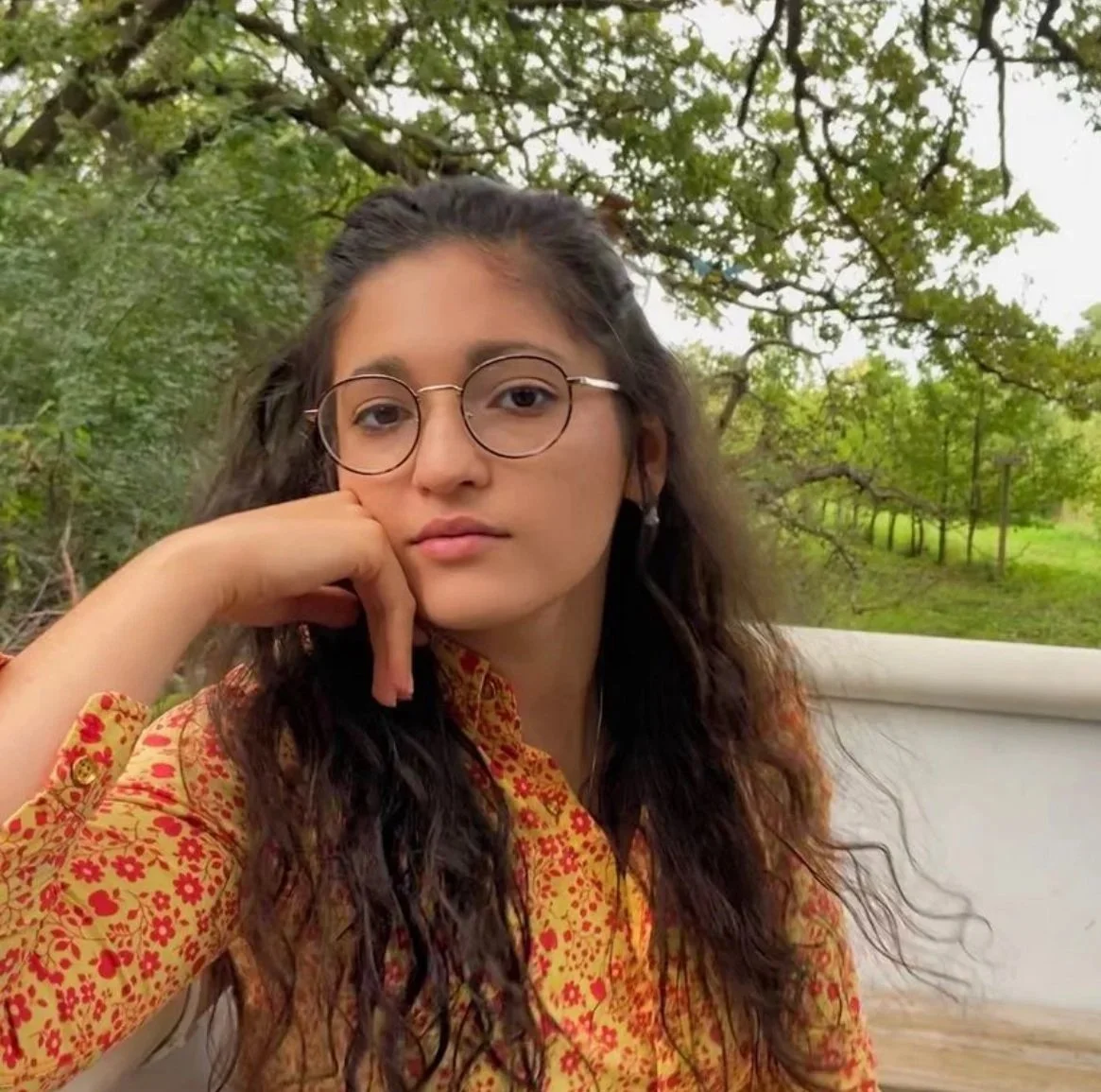
I am an Asian American feminist interdisciplinary scholar working at the intersection of Asian American, Black, decolonial, feminist, and gender studies. I am currently an Assistant Professor in the Department of Feminist and Gender Studies at Mount Allison University in Sackville, New Brunswick, Canada. I received my PhD in Gender Studies from Queen’s University in May 2025.
My research and teaching investigate themes of race and relationality, U.S. empire, diaspora and gendered migration, cultural production, and interdisciplinary methodologies that bridge creativity and theory.
At the center of my scholarship is the dynamism between science and storytelling. Drawing on Sylvia Wynter’s work on the science of the word, I analyze the physiological-creative rhythms of stories and how stories shape how we think, feel, and know ourselves and our social worlds. In other words, I study how our stories invoke physiological and affective responses/behaviors that generate both belonging and exclusion, and how science (and its narratives of genres of humanity like race, gender, and nation) is also a story that we tell. This lens untethers us from the disciplinary fictions of race, gender, and empire to illuminate alternative ways of knowing, sensing, and storytelling beyond the limits of biocentricity.
My current book manuscript emerges from my dissertation, Reading Rhythmically: Storytelling, Empire, and the Japanese War Bride. It formulates a relational and interdisciplinary methodology for interrogating the racial, gendered, and inter-imperial entanglements structuring the narrative production of the Japanese war bride as a “knowable” figure of racial-gendered difference and passivity. The project demonstrates how reading across and against archives, genres, and disciplines makes visible the limits of imperial knowledge, as well as distills the generative possibilities of reading, studying, sharing stories, and imagining otherwise beyond what we are proscribed to know.
As a teacher, I draw on antiracist feminist pedagogies to cultivate intellectually rigorous and inclusive classrooms. My courses push students to unlearn dominant narratives, think critically about power and social difference, and connect theory with creativity and lived experiences via an engaging and collaborative approach. Through this work, I foster a learning environment where students can take intellectual risks, care for one another across difference, and envision creative possibilities for social change.
You can read my published research in special issues on Sylvia Wynter’s scholarship in American Quarterly and Interviewing the Caribbean, in Handbook of Feminist Political Geography, and forthcoming in Frontiers: A Journal of Women Studies and The Routledge Handbook of Critical Urban Research.